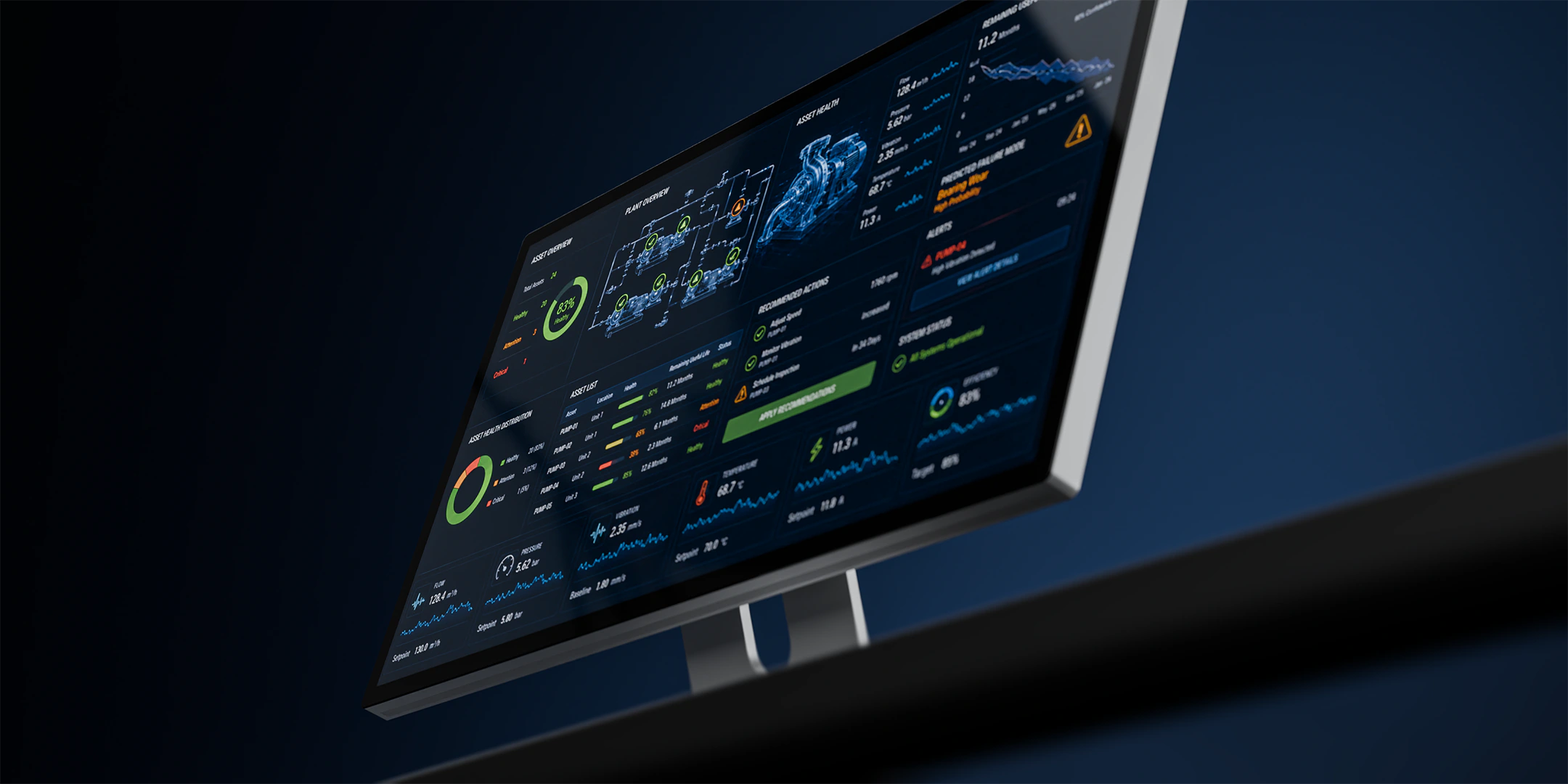
Most machine learning models learn patterns from data. Ours understand why those patterns exist. By embedding first-principles physics into the learning process, we build models that are accurate, explainable, and reliable, even where data is sparse, conditions are extreme, or failure cannot be an option.

Grounded in physics
We start with conservation laws, thermodynamic constraints, and material behaviour. Physics defines the boundaries within which our models are allowed to learn.

Trained on reality
Operational and test data refines the model, capturing real-world variation that physics alone cannot fully describe. The result is a model that generalises reliably beyond its training set.

Constrained to be correct
Machine learning operates within physically defined limits. This prevents the model from producing plausible but physically impossible outputs, which is critical in safety-sensitive applications.
Built where the cost of being wrong is highest.
Our models combine first-principles physics with operational data, built on engineering disciplines proven under motorsport pressures. Predictive accuracy, real-time response, and system integrity are inseparable in racing and they govern every model we deliver, regardless of sector.

How it works
01
Physics First
We define what the system can and cannot do using first-principles models: conservation laws, thermodynamics, material constraints, and system boundaries. This is not a pre-processing step. It is the foundation.
02
Data where it matters
Operational and test data is introduced to refine the model, capturing the real-world effects, tolerances, and variability that physics alone cannot fully resolve. Data improves precision. Physics ensures validity.
03
Machine learning, constrained
The machine learning layer trains within the bounds established by physics. It improves accuracy and adapts to new conditions without sacrificing explainability or stability. The model cannot produce outputs that violate physical law.
04
Predict, monitor, optimise
The deployed model predicts future system behaviour, monitors health in real time, and supports faster, safer decision-making. It operates continuously and improves with operational exposure.
Where it is applied

Marine
High-performance, class-compliant battery systems and predictive analytics engineered for the most demanding maritime applications.

Defence
Mission-critical battery systems and physics-informed predictive models for hostile environments and uncompromising reliability.
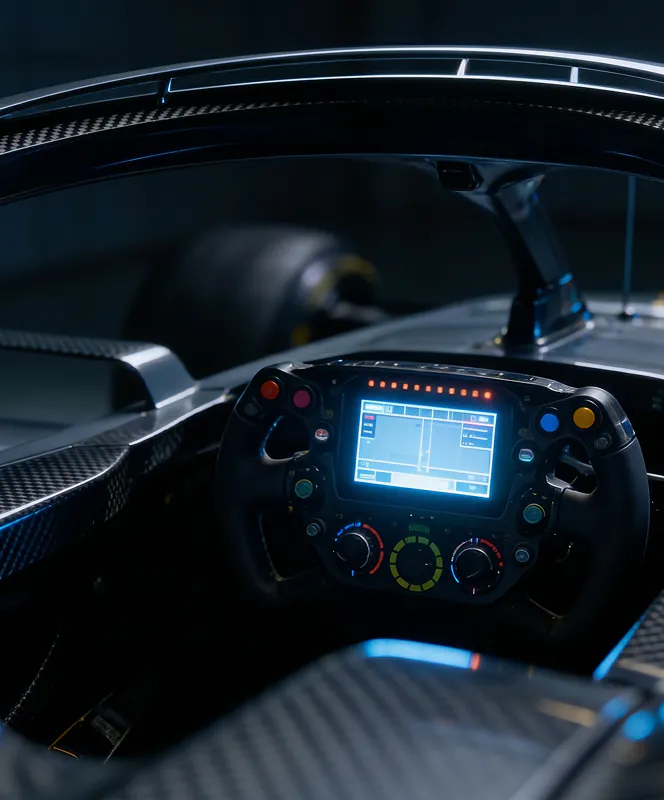
Motorsport
High-power, lightweight battery systems and predictive performance models for customer motorsport programmes.

Mobility
Scalable battery platforms and predictive intelligence for next-generation mobility and autonomous vehicles.
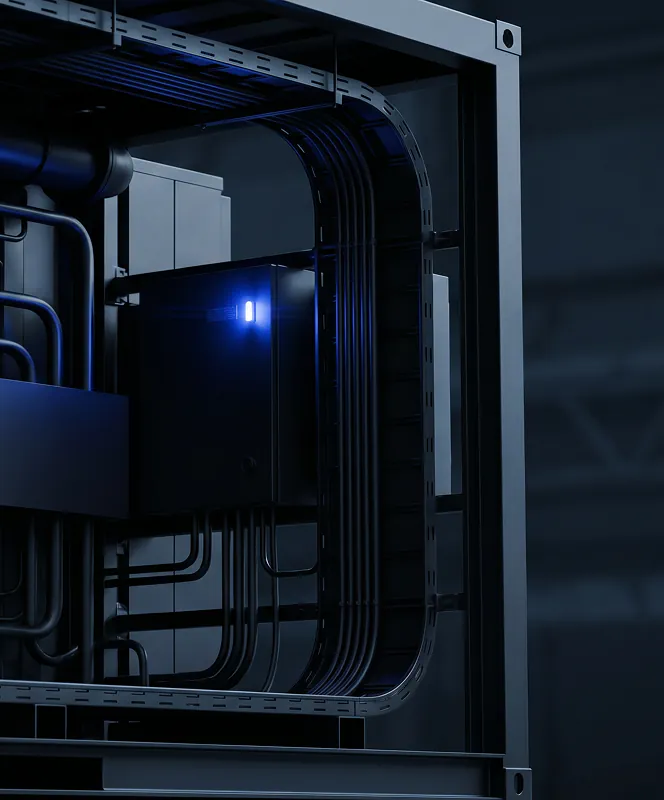
Energy
High-reliability battery systems and physics-informed predictive models for grid-edge and industrial applications.